
Table of Contents
- What a UAE Residency Visa Actually Is
- Residency Visa vs Tax Residency: Keep These Separate
- The Four Pathways to Dubai Residency
- Free Zone vs Mainland: Which Route Suits You
- The Residency Process, Step by Step
- Banking in Dubai: Personal and Corporate
- Where Entrepreneurs Actually Live
- Healthcare in Dubai
- Schools and Education for Expat Families
- Keeping Your Residency Valid
- Frequently Asked Questions
- Final Thoughts
A Dubai residency guide that starts with tax theory and stops there is only half a guide. Most people researching UAE residency have already read about the 0% personal income tax. What they need next is the practical picture: which visa pathway fits their situation, how banking actually works, where to live, what healthcare and schools cost, and how to keep the visa valid once it’s in hand. This guide covers all of it.
One thing to establish from the start: a UAE residency visa and UAE tax residency are two entirely separate legal statuses. A visa is an immigration status giving you the right to live here. Tax residency is a tax status with its own legal test and its own renewal process. Both matter, but they work differently and are managed through different authorities. This guide focuses on the visa and the life — the practical side of actually living in Dubai.
1. What a UAE Residency Visa Actually Is
A UAE residency visa is a formal legal status issued by the government that gives you the right to live and work in the Emirates within its renewal cycle. It is not a tourist visa, not a short-stay permit, and not a digital nomad authorisation.
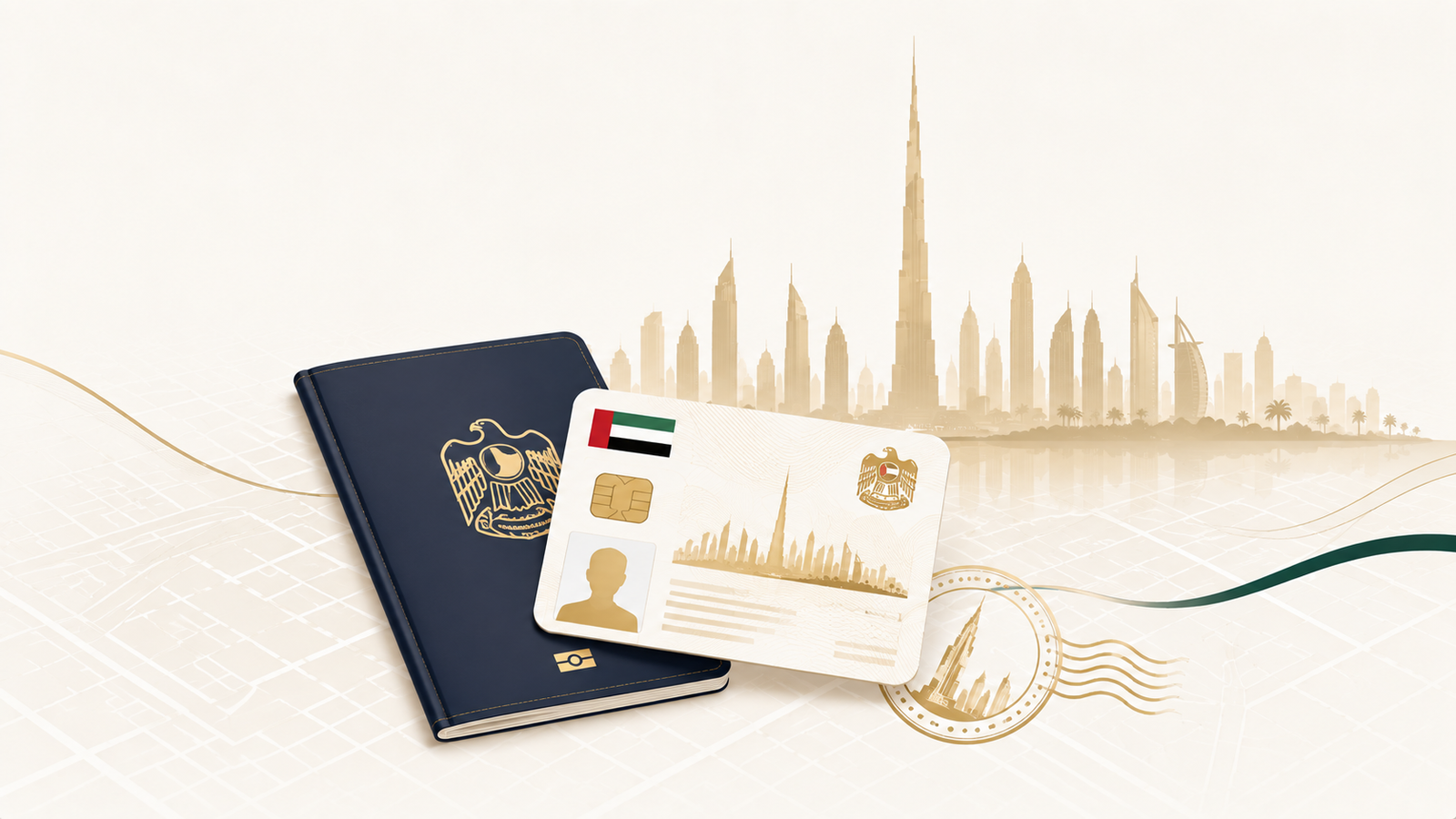
With a residency visa and an Emirates ID, you can open personal and corporate bank accounts as a resident, sign property leases and utility contracts, access healthcare under the UAE’s private system, enrol children in school, sponsor your spouse and children for their own visas, and travel in and out freely throughout the visa’s validity.
The visa works in conjunction with your Emirates ID — the two function together as your proof of residence for day-to-day life. Neither replaces the other.
2. Residency Visa vs Tax Residency: Keep These Separate
This distinction catches a surprising number of founders off guard, so it is worth being explicit.
| UAE Residency Visa | UAE Tax Residency | |
|---|---|---|
| What it is | Immigration status | Tax status |
| Issued by | ICP (Federal Authority for Identity, Citizenship, Customs and Port Security) | Federal Tax Authority |
| What it gives you | Right to live and work in the UAE | Basis for claiming UAE as your primary tax jurisdiction |
| Renewal | Every 2 years (standard) or 10 years (Golden Visa) | Tax Residency Certificate renewed annually |
| Physical presence test | 180-day consecutive absence rule | Separate qualifying presence criteria |
Having a UAE residency visa does not automatically make you a UAE tax resident. Tax residency has its own qualifying criteria around physical presence and substance, assessed separately by the Federal Tax Authority under UAE law. The visa is the starting point; genuine tax residency is built on top of it.
3. The Four Pathways to Dubai Residency
There is no single route to UAE residency. The right pathway depends on your situation, how you plan to operate, and how much capital you want to deploy upfront.
Pathway 1: Company-Sponsored Residency Visa (Most Popular)
You register a UAE company — either a free zone or mainland entity — and the company sponsors you for a 2-year renewable residency visa. This is the most widely used route for entrepreneurs, consultants, remote workers, and agency owners because it requires no property purchase, no employer, and no large capital commitment beyond the company setup costs.
Typical costs: Free zone licence and setup fees typically run AED 12,000–20,000 in the first year, with renewal around AED 10,000–18,000 annually, depending on the free zone and activity.
Timeline: Company registration generally takes 3–7 business days. From arrival, the full process — medical appointment, biometrics, visa stamping, Emirates ID production — typically takes 7–10 business days.
Best suited to: Founders, freelancers, consultants, e-commerce operators, coaches, and anyone whose clients sit primarily outside the UAE.
Pathway 2: Golden Visa via Property (10-Year Residency)
Purchase UAE property with a market value of AED 2,000,000 or more and you qualify for a 10-year Golden Visa, the longest and most secure residency option available. The Golden Visa carries no annual licence renewal requirement and no company to maintain, making it particularly attractive for those who want long-term stability without ongoing admin overhead.
Mortgaged property qualifies provided the equity already paid, typically a 20% deposit at minimum, reaches the AED 2,000,000 threshold. The Golden Visa allows sponsoring your spouse, children, and in many cases parents and dependent siblings — a broader family scope than standard visas.
Best suited to: Property investors, high-net-worth individuals, and founders who are purchasing UAE real estate anyway and want to anchor residency to that investment.
Pathway 3: Investor Visa via Property (2-Year)
A UAE property purchase of AED 750,000 or more qualifies for a 2-year renewable investor visa. This is distinct from the Golden Visa in terms of duration and family sponsorship scope, but it offers a more accessible entry point for buyers who are not yet ready to commit the full AED 2,000,000. For founders purchasing property anyway, it’s an efficient way to tie residency to an investment rather than maintaining a separate company.
Best suited to: Property buyers who want to anchor residency to their investment at a lower capital threshold.
Pathway 4: Employment Visa
If you relocate to work for a UAE-registered employer, that employer sponsors your residency. This is common and well established, but it creates dependency on your employer’s continued sponsorship and is handled by their HR and legal teams rather than by you directly. This pathway is outside the scope of what a business setup consultancy manages.
4. Free Zone vs Mainland: Which Route Suits You
If you’re taking the company-sponsored visa route, the choice between a free zone and mainland entity is the single most consequential structural decision you’ll make.
| Free Zone Company | Mainland Company | |
|---|---|---|
| Foreign ownership | 100% | 100% (most activities) |
| Setup timeline | 3–7 business days | 1–3 weeks |
| Trading within UAE | Restricted (via distributor or mainland entity) | Unrestricted |
| Government contracts | Generally not permitted | Permitted |
| Corporate tax | 0% on qualifying free zone income | 9% on net profit above AED 375,000 |
| Best for | International clients, digital/service businesses | UAE-market trading, government bids, local clients |
The practical rule of thumb: if your clients sit primarily outside the UAE and you run a service, consulting, or digital business, a free zone company suits you in almost every case. If you need to sell directly to UAE mainland customers, bid for government contracts, or operate a retail or physical presence, a mainland company formation is the right structure.
5. The Residency Process, Step by Step
Once your company is registered and you arrive in the UAE, the residency process follows a fixed sequence:
- Entry Visa / Status Change. You enter the UAE on a tourist or short-entry visa and apply for a status change once in the country, or the process begins before entry depending on your route.
- Medical Appointment. A brief combined appointment covering a blood test, chest X-ray, fingerprinting, and a photograph. Typically completed in under an hour at an approved centre.
- Visa Stamping. Once medical results are clear, the residency visa is stamped into your passport.
- Emirates ID Production. Your Emirates ID is produced and delivered, typically within a few days of visa stamping.
- Bank Account Opening. With your Emirates ID in hand, opening a personal account is straightforward at most UAE banks.
For a single founder with a clean profile and complete documentation, this sequence typically takes 7–10 business days from arrival.
6. Banking in Dubai: Personal and Corporate
Personal Banking
With a valid residency visa and Emirates ID, opening a personal bank account is straightforward — often completed in a single branch visit. Major retail banks include Emirates NBD, ADCB, Mashreq, First Abu Dhabi Bank, and RAKBANK. For founders who prefer a digital-first approach, Wio Bank has become popular for its clean interface and multi-currency functionality.
Corporate Banking
Opening a corporate account is a more involved process. You’ll need your trade licence, memorandum of association, shareholder documents, and your personal Emirates ID and visa. Most banks process corporate applications in 3–10 business days once documentation is complete and verified.
A note on rejections: corporate account rejections do happen, typically due to incomplete documentation, higher-risk business activities, or insufficient economic substance. Preparing documentation thoroughly and choosing the right bank for your activity type significantly improves approval rates.
UAE banks support SWIFT transfers and integrate well with global payment networks, making them a practical base for internationally trading businesses.
Bookkeeping and Compliance
Once your UAE company is active and banking is in place, accounting and bookkeeping needs to be set up from day one. Most free zones require audited financial statements annually, and VAT registration becomes mandatory once taxable supplies exceed AED 375,000 over 12 months.
7. Where Entrepreneurs Actually Live
Dubai is a large, spread-out city, and your neighbourhood shapes daily life considerably more than most founders anticipate before arriving.
| Neighbourhood | Character | Typical Annual Rent (1–2BR) |
|---|---|---|
| Business Bay | Central, walkable, dense with cafes and restaurants | AED 80,000–140,000 |
| Dubai Marina / JBR | Waterfront, social, popular with Western expats | AED 75,000–150,000 |
| Downtown Dubai | Trophy address, Burj Khalifa proximity, vibrant | AED 90,000–200,000+ |
| Palm Jumeirah | Premium, family-oriented, private beach access | AED 200,000–600,000+ |
| Jumeirah Village Circle | Affordable, family-friendly, quieter | AED 45,000–85,000 |
Founders who rush into a long-term lease in the first week often end up relocating within the year once they’ve spent enough time in the city to understand which area actually matches their daily routine. A short-term rental first, even for four to six weeks, tends to produce a better long-term housing decision.
8. Healthcare in Dubai
Dubai’s private healthcare system is well developed, with high standards, short waiting times, and English widely spoken at all major facilities. Health insurance is mandatory for all residency visa holders in Dubai, and proof of cover is required as part of the visa process.
Typical annual premiums:
- Single healthy adult: AED 4,000–12,000 depending on level of cover and age
- Comprehensive family plan: AED 15,000–40,000+
Many free zone packages include basic health insurance as part of the setup bundle, which covers the minimum mandatory requirement. Founders with families or specific health requirements typically upgrade to broader cover separately.
Major private hospitals include American Hospital Dubai, Mediclinic, King’s College Hospital Dubai, and Cleveland Clinic Abu Dhabi, the latter a short drive into the capital for specialist care.
9. Schools and Education for Expat Families
Dubai offers schooling across multiple curricula, including British, American, International Baccalaureate, French, German, and several others. The British curriculum is the most widely available and is the default choice for UK, Australian, South African, and many South Asian families.
Annual fees (approximate ranges):
- Foundation/KG level: AED 15,000–35,000
- Mid-tier primary to secondary: AED 25,000–55,000
- Premium/prestigious schools: AED 80,000–100,000+
Waiting lists at the most sought-after schools can be significant. Families who know their Dubai move is coming should research and apply 3–6 months before their intended start, rather than treating school search as something to deal with after arrival.
10. Keeping Your Residency Valid
Getting the visa is the beginning of the process, not the end. Residency has ongoing obligations that must be managed actively.
Annual licence renewal. If your residency is tied to a company you own, that trade licence must be renewed every year. A lapsed licence puts the linked visa at direct risk and can trigger visa cancellation, so renewal needs to be tracked as a fixed compliance calendar item rather than left to chance.
Visa renewal. A standard residency visa renews every 2 years, requiring a repeat of the medical appointment and biometrics. A Golden Visa renews every 10 years. Neither renews automatically — an application must be submitted.
The 180-day rule. Leave the UAE for more than 180 consecutive days and your residency visa can be cancelled. An absence permit can preserve it for longer planned absences, but this needs to be arranged in advance. The 180-day rule applies to the visa; tax residency has its own separate physical presence criteria.
Emirates ID renewal. The Emirates ID renews alongside the residency visa and must be kept current, since it serves as your proof of residence for banking, utilities, and most day-to-day transactions.
Corporate tax registration. Regardless of whether your UAE entity expects to owe corporate tax, registration with the Federal Tax Authority is mandatory. Missing this is a compliance breach separate from the visa itself, with its own penalty structure — this is a job for a VAT and tax advisory function, not something to leave unmanaged.
11. Frequently Asked Questions
How do I get residency in Dubai? The most common route for founders and entrepreneurs is registering a UAE company — either a free zone or mainland entity — which then sponsors you for a 2-year renewable residency visa. Other routes include property investment via the Golden Visa (AED 2,000,000+) or the investor visa (AED 750,000+), or employment sponsorship through a UAE employer.
What is the difference between a UAE residency visa and tax residency? A residency visa is an immigration status giving you the legal right to live in the UAE, managed through the ICP. Tax residency is a separate tax status with its own qualifying criteria, managed through the Federal Tax Authority, and is not automatically granted by holding a residency visa.
How much does it cost to get Dubai residency through a company? Free zone company setup typically costs AED 12,000–20,000 in year one, covering the licence and associated fees. Visa costs, medical appointments, and Emirates ID fees add to this total. Annual licence renewal typically runs AED 10,000–18,000, depending on the free zone and activity.
Can I get Dubai residency without buying property? Yes. The company-sponsored residency route requires no property purchase — you simply register a UAE company and it sponsors your visa. Most founders and entrepreneurs use this route.
How long does the Dubai residency process take? Company registration takes 3–7 business days for most free zone entities. From arrival in the UAE, the medical, biometrics, visa stamping, and Emirates ID process typically takes 7–10 business days with complete documentation.
Can I sponsor my family on a UAE residency visa? Yes. As a UAE visa holder, you can sponsor your spouse and dependent children. The Golden Visa additionally allows sponsoring parents and in some cases dependent siblings. Employment visa holders can also typically sponsor immediate family members.
What happens if I leave Dubai for more than 180 days? A consecutive absence of more than 180 days can result in visa cancellation. If you plan an extended trip, an absence permit can preserve your status — this needs to be arranged in advance rather than after the absence has already begun.
Do I need a UAE company to get a residency visa? No, not necessarily. Property investment routes (Golden Visa or investor visa) provide residency without a company. Employment sponsorship is another option. However, for most founders and self-employed individuals, the company-sponsored route is the most practical and accessible.
What happens to my residency if my company lapses? A lapsed or cancelled trade licence puts the linked residency visa at direct risk. This is one of the most common reasons founders lose their visa unexpectedly — annual renewal must be tracked and completed on time every year.