
Table of Contents
- Why “Most Profitable” Starts With the Wrong Word
- The Data That Actually Tells You Where the Money Is Moving
- Industry One: Technology, AI and Software
- Industry Two: Real Estate and Property Services
- Industry Three: Finance, Fintech and Virtual Assets
- Industry Four: Tourism, Hospitality and Experiences
- Industry Five: Trade, Logistics and E-Commerce
- Industry Six: Consulting and Professional Services
- Industry Seven: Healthcare, Wellness and Longevity
- Industry Eight: Advanced Manufacturing
- Industry Nine: Food, Beverage and AgriTech
- Industry Ten: Media, Content and the Creator Economy
- What Profitable Actually Means After UAE Corporate Tax
- Free Zone or Mainland: Which Structure Fits Which Industry
- Frequently Asked Questions
- Final Thoughts
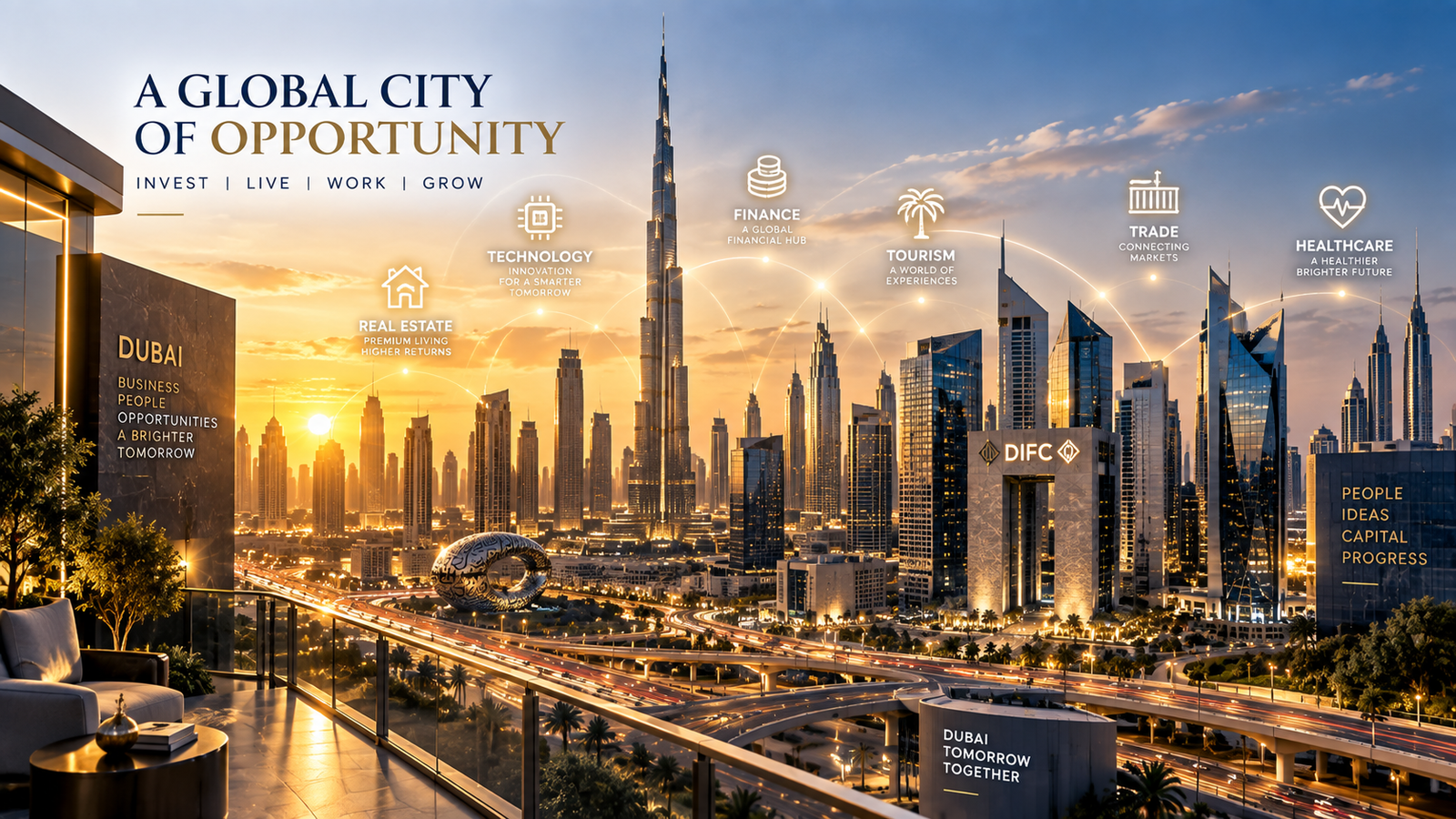
The most profitable businesses in Dubai are not a list of ideas — they are ten industries the UAE government is actively building around with real capital, real regulation, and real infrastructure. For a founder choosing where to establish, that distinction matters enormously: an industry with government backing has improving odds year over year, while one without it has to compete on its own terms in one of the world’s most competitive business environments.
This guide walks through all ten, supported by published data rather than estimates, and then addresses the question that determines whether any of them are actually profitable: what does the UAE corporate tax system do to your margins, and which structure captures the most of what you earn?
1. Why “Most Profitable” Starts With the Wrong Word
A business is not profitable because it sits in a particular industry. It is profitable because its revenue exceeds its costs and its taxes — and in Dubai, the tax variable is more nuanced than most guides acknowledge.
The UAE introduced a federal corporate tax of 9% on taxable income above AED 375,000 in June 2023. Whether that rate applies, and whether a 0% rate applies instead, depends on the company structure and the nature of the income. A free zone company that qualifies as a Qualifying Free Zone Person pays 0% on qualifying income. A mainland company pays 9% on net profit above AED 375,000. The industry determines where the opportunity is — the structure determines how much of it you keep.
With that framing established, here are the ten industries where Dubai’s capital and government attention are most concentrated.
2. The Data That Actually Tells You Where the Money Is Moving
Before the industry breakdown, a single table putting the key data points in one place:
| Industry | Key Data Point | Source |
|---|---|---|
| Technology and AI | AED 40.4bn tech FDI, H1 2025 — 62% YoY increase | Dubai FDI Monitor |
| Real Estate | AED 917bn transactions, full year 2025 — record | Dubai Land Department |
| Healthcare and Longevity | 15.4% sector growth, first 9 months 2025 — fastest of any sector | Dubai DET |
| Tourism and Hospitality | 19.59 million international overnight visitors 2025 — third successive record | Dubai DET |
| Trade and Logistics | UAE non-oil foreign trade exceeded USD 1 trillion in 2025 — first time | UAE Federal Competitiveness |
| Digital Startups | 582 startups supported by Dubai Chamber of Digital Economy, first 9 months 2025 | Dubai Chamber |
| Media and Creator | Dubai ranked first globally for creative industry FDI, fourth consecutive year | fDi Markets / Dubai FDI Monitor |
| Consulting | Dubai Chamber active memberships 292,486 in 2025 — 13.2% YoY increase | Dubai Chamber |
| Manufacturing | Operation 300bn targets AED 300bn industrial GDP contribution by 2031 | UAE MoIAT |
| Food and AgriTech | New food sector Chamber memberships +42.2% H1 2025 | Dubai Chamber |
None of these figures are projections — they are published data points from named government and research sources. The direction they collectively point is consistent: Dubai’s economy is diversifying rapidly, government capital is following specific sectors, and the infrastructure for internationally mobile founders is deepening year over year.
3. Industry One: Technology, AI and Software
Technology is the industry with the most government capital behind it and the clearest data trail confirming that capital is producing results.
The numbers: tech-focused FDI in Dubai reached AED 40.4 billion in the first half of 2025 alone, a 62% increase on the same period the year before, according to the Dubai FDI Monitor. Dubai ranked first globally for tech-sector FDI project volume during that period. The Dubai Chamber of Digital Economy supported 582 new digital startups in the first nine months of 2025, with AI accounting for 21% of that activity. In June 2026, the Dubai government announced a two-year programme to integrate AI into over 295,000 companies, building on a digital-trade programme with Amazon that engaged more than 105,000 companies by May 2026.
The Information and Communication sector contributed AED 12.1 billion to Dubai’s GDP in Q1 2026 alone — a 2.7% increase year on year.
What this means for a founder: the infrastructure for a technology or AI business in Dubai — specialist free zones, regulatory clarity, government support programmes, and a dense international peer ecosystem — is more developed than in almost any comparable jurisdiction. The right structure for most technology founders is a free zone company in Dubai Internet City or a suitable equivalent, combined with ongoing accounting and bookkeeping from day one of trading.
Corporate tax position: a qualifying free zone technology company earning qualifying income from international clients can pay 0% on that income under the QFZP regime. Confirm the qualifying income analysis with a UAE VAT and corporate tax adviser before assuming the 0% rate applies.
4. Industry Two: Real Estate and Property Services
Real estate is Dubai’s most data-dense industry and the one that most consistently demonstrates the market’s structural resilience.
The numbers: Dubai concluded 2025 with approximately AED 917 billion in real estate transactions across more than 270,000 deals, according to the Dubai Land Department — its strongest year on record. CBRE reported over 206,000 residential transactions in 2025, an 18% increase year on year, with sales prices rising 13% annually by Q4. Average hotel occupancy rose to 80.7% and the average daily room rate climbed 8% to AED 579.
This strength was tested directly. In February and March 2026, regional conflict led to missile strikes on the UAE. Transaction volume fell by approximately 25% in the weeks that followed, according to reports citing Dubai Land Department and CBRE data. By Q2 2026, the market had recovered and was operating with momentum through the second quarter as wider tensions de-escalated.
The resilience pattern in 2026 echoes what was seen after previous regional disruptions — a temporary slowdown followed by recovery rather than structural deterioration.
What this means for a founder: real estate in Dubai is not just a place to park capital. It is an active commercial sector with opportunities across brokerage, property management, proptech, investment structuring, and development services. Real Estate, Renting and Business Services accounted for 37.6% of new Dubai Chamber of Commerce memberships in 2025 — the largest category of new registrations.
Structure note: a brokerage or real estate services business typically requires a mainland company or a specific free zone licence depending on the activity. Confirm the licence category before formation.
5. Industry Three: Finance, Fintech and Virtual Assets
Dubai’s financial ecosystem has two parallel regulatory frameworks operating simultaneously — the DFSA for the Dubai International Financial Centre, and VARA for virtual assets across the broader emirate — and both are attracting substantial international business.
The numbers: the DIFC hosted 1,677 AI, fintech and innovation entities at end 2025 — a 35% increase year on year. In the September 2025 Global Financial Centres Index, Dubai ranked among the world’s top four cities for fintech. By the March 2026 edition, Dubai had risen to seventh globally overall — its highest position ever. According to the Henley Private Wealth Migration Report 2025, the UAE was projected to attract a net inflow of approximately 9,800 millionaires in 2025, bringing an estimated USD 63 billion in investable wealth.
What this means for a founder: fintech, payments, lending, wealth management, insurance technology, and virtual asset services all operate within a framework that is more clearly defined in Dubai than in most comparable jurisdictions. That clarity is the commercial opportunity — founders can build regulated financial products with a defined compliance pathway rather than operating in a grey zone.
For virtual asset businesses specifically, VARA licensing requirements are activity-specific. Confirm which of VARA’s eight regulated activities apply to your business at vara.ae before structuring anything.
Structure note: financial services and fintech businesses typically require DIFC or DFSA authorisation, VARA licensing, or a specific mainland financial services licence depending on the activity. A standard free zone trade licence is not sufficient for most regulated financial activities.
6. Industry Four: Tourism, Hospitality and Experiences
Dubai’s tourism sector produces some of the most consistently record-setting figures of any industry in the emirate, and its government investment in sustaining that momentum is among the most visible in the world.
The numbers: Dubai welcomed 19.59 million international overnight visitors in 2025, a 5% increase year on year — the third consecutive record year, according to the Dubai Department of Economy and Tourism. December 2025 saw over two million visitors in a single month for the first time. Average hotel occupancy rose to 80.7%, up from 78.2%, and Dubai International Airport maintained its position as the world’s busiest airport for international passengers for the eleventh consecutive year.
To sustain growth in newer areas, DET launched a Hotel Incentive Programme in October 2025 targeting emerging zones including Dubai South, Palm Jebel Ali, Dubai Parks, and Dubai Islands.
What this means for a founder: tourism is one of the few industries where the underlying demand is not built by individual founders — it is built by government infrastructure and an international reputation that has compounded over decades. For a founder, that means entering an industry where demand is already established and the commercial opportunity is in serving it.
The range of hospitality-adjacent businesses extends far beyond hotels and restaurants: yacht and marine services, luxury experiences, event management, travel technology, and experiential tourism all have genuine markets in Dubai’s visitor economy.
Structure note: hospitality businesses often require mainland licences depending on the specific activity and physical location. Free zone structures suit hospitality technology and management consultancy; physical operations generally require a mainland entity.
7. Industry Five: Trade, Logistics and E-Commerce
Dubai’s position as the world’s most connected trade hub is not a marketing claim — it is a measurable fact backed by infrastructure investment that has been compounding for decades.
The numbers: the UAE’s non-oil foreign trade surpassed USD 1 trillion for the first time in 2025, an increase of 26.8% year on year. In the first four months of 2026, DP World attracted over AED 854 million in new investments at Jebel Ali Free Zone, with companies expanding across manufacturing, logistics, food production, healthcare, vehicle handling, and heavy equipment.
Jebel Ali Port handles approximately 73% of the UAE’s food and beverage trade by value, connecting to more than 150 ports worldwide. For e-commerce specifically, the UAE’s online retail market has continued to expand, creating opportunities for DTC brands, marketplace sellers, fulfilment companies, and businesses serving customers across the GCC and beyond.
What this means for a founder: trade and logistics in Dubai benefits from infrastructure that cannot be replicated at speed elsewhere — the port, the free zone network, the air connectivity, and the regulatory framework for transit trade are all in place. For an e-commerce or trading business, the case for using Dubai as a regional hub rather than a Western European or Asian alternative is increasingly supported by cost and connectivity data rather than only by tax arguments.
Structure note: trading companies that import, repackage, and re-export without selling into the UAE mainland typically use a free zone structure. Those selling into the UAE retail market need a mainland company or a specific free zone arrangement. 360bizs can confirm the right route for your specific trading activity.
8. Industry Six: Consulting and Professional Services
Consulting is one of the most accessible industries for internationally mobile founders in Dubai — low capital requirements, no physical inventory, and a client base that can be anywhere in the world.
The numbers: Dubai Chamber of Commerce active memberships reached 292,486 companies in 2025, a 13.2% increase year on year. Professional and business services were among the largest drivers of new registrations. The consulting sector spans management, IT, marketing, HR, legal (non-rights-of-audience), financial, and specialist technical services.
What this means for a founder: consulting is the industry where the free zone company structure works most cleanly. Most consulting clients sit outside the UAE, the business has minimal physical infrastructure requirements, and the founder’s own expertise is the primary asset. A free zone trade licence for consultancy activities, a UAE investor visa, and a UAE corporate bank account are the three building blocks.
The QFZP 0% corporate tax rate is most naturally available to consulting businesses — qualifying income from transactions with non-UAE clients is within the qualifying income perimeter in most cases. Confirm the specific analysis with a UAE tax adviser before relying on it.
Structure note: founders who need to provide consulting services directly to UAE government entities or mainland UAE corporations typically find a mainland company opens more doors than a free zone entity alone.
9. Industry Seven: Healthcare, Wellness and Longevity
Healthcare is the industry with the most recent and most significant government backing on this list — an entirely new regulatory authority established by law in June 2026.
The numbers: Human Health and Social Work activities in Dubai expanded by 15.4% in the first nine months of 2025 — the fastest growth of any sector tracked by the Dubai Department of Economy and Tourism — reaching AED 5.3 billion in added value. On 10 June 2026, Sheikh Mohammed bin Rashid Al Maktoum issued Law No. 17 of 2026, establishing the Dubai Longevity Authority under the chairmanship of Sheikh Hamdan. Its mandate covers research, clinical trials, manufacturing, and patient care across longevity, wellness, and advanced healthcare.
What this means for a founder: the combination of 15.4% organic sector growth and a brand new dedicated regulator creates a rare window — an industry where the commercial opportunity is already proven and the regulatory framework is still being built around it. Founders who establish early in a newly regulated sector typically have a structural advantage over those who enter once the market is mature and competitive.
Healthcare and wellness encompasses a wide range of business models — from clinics and medical centres requiring DHA or MOH licences to coaching, fitness, nutrition, telehealth, and health technology businesses that operate with lighter-touch licensing. Understanding which regulatory framework governs your specific activity is the first step before formation.
Structure note: physical medical facilities require mainland licences and DHA or MOH approval. Health coaching, online wellness services, and health technology businesses may be established in a free zone. Confirm the specific activity against the relevant licensing authority before filing.
10. Industry Eight: Advanced Manufacturing
Manufacturing is the industry with the longest time horizon on this list — the government programme driving it targets a 2031 endpoint, and the businesses building within it are positioning for a decade, not a quarter.
The numbers: UAE Operation 300bn, run by the Ministry of Industry and Advanced Technology, targets raising the industrial sector’s GDP contribution from AED 133 billion to AED 300 billion by 2031. This is supported by AED 30 billion in financing from Emirates Development Bank and assistance for 13,500 industrial SMEs. Priority sectors include space technology, medical supplies, pharmaceuticals, advanced-technology manufacturing, machinery, chemicals, electronics, metals, and food and beverage production.
What this means for a founder: advanced manufacturing in the UAE is not a sector for lean, remote-first operations — it requires physical presence, machinery, staff, and supply chain integration. What the government programme provides is access to financing, free zone infrastructure designed for industrial use, and a stated national priority that translates into procurement preferences and regulatory support.
Structure note: manufacturing businesses typically require a mainland company or a specific industrial free zone licence, depending on the activity and whether UAE domestic supply is part of the model. Jebel Ali Free Zone, Dubai Industrial City, and several other purpose-built zones serve different segments of the manufacturing spectrum.
11. Industry Nine: Food, Beverage and AgriTech
Food and beverage is the sector where Dubai’s geography — a desert city feeding itself from a hub that connects to 150+ ports — meets the most ambitious agricultural technology investment in the region.
The numbers: new food-sector memberships at Dubai’s Chamber of Commerce rose 42.2% in the first half of 2025 compared with the same period the year before. Emirates Development Bank runs a dedicated AgriTech financing fund worth AED 100 million. DP World is building an AED 550 million Agri Terminals facility at Jebel Ali under the National Food Security Strategy 2051. Dubai’s Bustanica vertical farm — at 330,000 square feet, one of the world’s largest — produces over 1,000 tonnes of leafy greens annually using 95% less water than conventional farming.
What this means for a founder: the 42.2% growth in food-sector Chamber registrations in a single half-year period is the single sharpest commercial signal on this list. It reflects not government aspiration but actual founder decisions — people choosing to build food businesses in Dubai at a rate that is accelerating, not slowing.
The range of opportunity spans restaurant and F&B operations, food import and distribution, food technology and packaging, and AgriTech platforms. Each has different licensing, zoning, and compliance requirements.
Structure note: F&B operations serving the public require mainland licences and specific municipality approvals. Food import, trading, and technology businesses can often be structured through a free zone entity depending on the specific activity and client base.
12. Industry Ten: Media, Content and the Creator Economy
Media is the industry that Dubai has invested in most visibly for the founder community — with a dedicated creator programme, a specific Golden Visa route, and a USD 40.8 million government content fund.
The numbers: Creator HQ, Dubai’s initiative to attract 10,000 influencers globally, signed up more than 2,400 members from 147 countries within its first six months and is backed by a USD 40.8 million Content Creators Support Fund. Dubai ranked first globally for creative industry FDI for the fourth consecutive year, according to fDi Markets data, attracting 754 greenfield projects in 2025. Estimates of the UAE’s influencer marketing market range from approximately USD 173 million to over USD 600 million depending on methodology — every estimate agrees on the direction.
What this means for a founder: media and content creation in Dubai is supported by infrastructure that few other cities offer simultaneously — a dedicated regulator (Dubai Media City), a creator-specific Golden Visa route, government grant funding, and an international community of peers deep enough to sustain a professional network from day one of arrival.
A creator business is simultaneously a technology business, a media business, and a personal brand. Dubai’s investment across all three creates a genuinely unusual operating environment for founders building at the intersection of content, digital products, and audience monetisation.
Structure note: most media and content businesses use a Dubai free zone company in Dubai Media City or a suitable equivalent. The QFZP 0% corporate tax rate is potentially available depending on the income mix and qualifying income analysis.
13. What Profitable Actually Means After UAE Corporate Tax
Profitability in Dubai is not determined by an industry alone. It is determined by the interaction between revenue, operating costs, and the corporate tax structure applied to net income.
Under the UAE corporate tax framework, introduced by Federal Decree-Law No. 47 of 2022:
| Scenario | Effective Tax Rate |
|---|---|
| Taxable income below AED 375,000 | 0% (universal) |
| Taxable income above AED 375,000 — mainland or non-qualifying free zone | 9% on the excess |
| Qualifying income of a Qualifying Free Zone Person | 0% |
| Non-qualifying income of a QFZP | 9% |
| Revenue at or below AED 3 million — Small Business Relief elected | 0% (through periods ending 31 December 2029) |
| Personal income drawn from any UAE company (salary, dividends) | 0% — no UAE personal income tax |
The QFZP regime is not automatic. It requires a free zone company to meet all six conditions simultaneously — genuine UAE substance, qualifying income within the de minimis limit, audited financial statements, transfer pricing compliance, and no election for standard-rate taxation — every tax period. Breaching any condition removes the 0% rate for five years.
The point is not that 0% is unavailable — it is available to a substantial proportion of internationally oriented businesses in free zones. The point is that it is conditional and must be correctly structured and maintained, not assumed. UAE VAT consultancy and advisory support from 360bizs covers the QFZP condition analysis and ongoing tracking as part of the compliance work we do for UAE businesses.
14. Free Zone or Mainland: Which Structure Fits Which Industry
The industry determines the right structure more than the founder’s preference does. Here is the practical guide:
| Industry | Primary Structure | Reason |
|---|---|---|
| Technology, AI, Software | Free zone | International clients, QFZP 0% rate available, specialist zones |
| Real Estate Services | Mainland or free zone (activity-dependent) | Brokerage typically requires mainland; technology/management can be free zone |
| Finance and Fintech | DIFC/DFSA or VARA-licensed (regulated) | Regulatory framework dictates the structure |
| Tourism and Hospitality | Mainland for physical operations; free zone for tech/management | Physical UAE operations require mainland licence |
| Trade and Logistics | Free zone for re-export; mainland for UAE sales | UAE mainland sales require mainland entity or arrangement |
| Consulting | Free zone | International clients, QFZP eligible, low physical footprint |
| Healthcare and Wellness | Mainland for clinics (DHA/MOH); free zone for digital/coaching | Physical medical facilities need mainland and DHA/MOH |
| Manufacturing | Mainland or industrial free zone | Physical operations, UAE supply chain, industrial zoning needed |
| Food and F&B | Mainland for consumer operations; free zone for trading | Public-facing F&B needs mainland municipality approval |
| Media and Creator Economy | Free zone (Dubai Media City or equivalent) | Purpose-built zone, QFZP eligible, international income |
The structure decision has direct consequences for the corporate tax rate, the trading scope, and the compliance obligations. Getting it right at formation saves a restructuring exercise later that costs time, money, and in some cases a five-year QFZP lockout.
15. Frequently Asked Questions
What are the most profitable businesses in Dubai? The ten industries attracting the most capital, government support, and new business registrations in Dubai are technology and AI, real estate and property services, finance and fintech, tourism and hospitality, trade and logistics, consulting and professional services, healthcare and longevity, advanced manufacturing, food and AgriTech, and media and the creator economy. Profitability within each depends on structure, costs, and the UAE corporate tax position.
Which industry is growing fastest in Dubai? By government data, Healthcare, Wellness and Longevity grew fastest in the first nine months of 2025 — 15.4% expansion, the highest of any sector tracked by the Dubai Department of Economy and Tourism. Technology is a close second by FDI volume, with AED 40.4 billion in the first half of 2025 alone.
What does profitable mean after UAE corporate tax? It depends on the structure. A mainland company pays 9% on net taxable income above AED 375,000. A Qualifying Free Zone Person pays 0% on qualifying income, provided all six QFZP conditions are met every tax period. The Small Business Relief election is available for businesses with revenue at or below AED 3 million through 31 December 2029. Personal income drawn from any UAE company is subject to 0% personal income tax regardless of structure.
Can foreign founders start a business in Dubai’s most profitable sectors? Yes. 100% foreign ownership is available in all free zones and in most mainland activities. A handful of regulated or specialist sectors require specific licences or local partner arrangements, but for the large majority of the ten industries covered in this guide, a foreign founder can own and operate a UAE company without any UAE national involvement.
Which Dubai structure suits which industry? Technology, consulting, and media suit free zone companies for their international client base and QFZP tax eligibility. Trade and logistics depends on whether the model is re-export (free zone) or UAE domestic sales (mainland). Hospitality and manufacturing with physical UAE operations require mainland licences. Regulated financial services require DIFC/DFSA or VARA frameworks. Healthcare with physical facilities requires mainland and DHA/MOH approval.
Does UAE corporate tax reduce the profitability of Dubai businesses? For businesses correctly structured as Qualifying Free Zone Persons, qualifying income is taxed at 0% — no reduction in profitability relative to the pre-June 2023 position. For mainland businesses or non-qualifying free zone income, the 9% rate applies above AED 375,000. Compared with most major economies (UK 25%, US 21% federal plus state, EU 19–34%), 9% is still materially lower — but the structure must be correct to access the 0% rate where it is available.
What is the minimum cost to start a business in Dubai’s growth industries? Free zone company formation and first-year costs typically run AED 12,000–25,000 depending on the zone and activity, plus visa and Emirates ID costs of AED 3,500–7,000. Mainland formation costs vary more widely. Some regulated industries — financial services, healthcare clinics, manufacturing — require additional capital and licences beyond the base formation cost.
Which Dubai free zone is best for a technology or AI business? Dubai Internet City is the most widely used free zone for technology and SaaS businesses. The DIFC suits fintech and financial technology. Dubai Media City suits content, publishing, and media businesses. The right zone depends on the specific activity, licence category, and whether co-location with industry peers is a priority.